Navigating the complexities of work or school while upholding your faith can sometimes be challenging, especially when religious observances require time away. Employers and educational institutions often have policies regarding absences, but understanding your rights and how to properly request time off for religious reasons is crucial. This article will guide you through the process, explain your legal protections, and highlight the invaluable role of a well-crafted religious holiday excused absence template in ensuring your request is handled smoothly and respectfully.
Many individuals face the dilemma of choosing between their spiritual obligations and their professional or academic responsibilities. Fortunately, legal frameworks exist to protect the right to religious freedom, often requiring reasonable accommodations for employees and students. Knowing how to articulate your needs effectively can make all the difference in receiving the necessary understanding and approval for your religious holiday leave.
By the end of this comprehensive guide, you will gain a deeper understanding of religious accommodation laws, learn the key components of an effective absence request, and recognize why using a structured religious holiday excused absence template can simplify this sensitive process for everyone involved. We aim to empower you with the knowledge to confidently manage your religious observances without compromising your career or education.
Understanding Religious Accommodation Rights in Workplaces and Schools
Religious accommodation is a cornerstone of workplace and educational equality, designed to ensure individuals can practice their faith without undue hardship. Both federal and state laws provide significant protections, requiring employers and schools to make reasonable adjustments for employees’ and students’ religious beliefs and practices. Understanding these rights is the first step toward effectively requesting an excused absence for religious holidays.
Legal Framework for Religious Observance
In the United States, Title VII of the Civil Rights Act of 1964 is a primary federal law prohibiting discrimination based on religion in employment. This includes requiring employers to reasonably accommodate an employee’s religious beliefs or practices, unless doing so would cause an “undue hardship” on the employer’s business operations. Similarly, many educational institutions have policies, often guided by state laws or internal regulations, that support students’ rights to observe religious holidays.
A reasonable accommodation might include flexible scheduling, voluntary shift swaps, or excused absences for religious holidays or practices. The key is that the accommodation should not impose a significant difficulty or expense on the employer or school. These protections ensure that individuals are not forced to choose between their job or education and their deeply held religious convictions.
Common Challenges and Misconceptions
Despite legal protections, employees and students sometimes encounter challenges when requesting religious accommodations. A common misconception is that any request for religious leave must be granted without question. While the law requires reasonable accommodation, it does not mandate every requested accommodation if it poses an “undue hardship.” This often means a significant difficulty or expense, which is a higher standard than “de minimis” (minimal) cost.
Another challenge can be a lack of clear communication or late notification from the individual. Employers and schools need adequate time to arrange for coverage or alternative assignments. Therefore, providing timely and clear information, often facilitated by a religious holiday excused absence template, helps prevent misunderstandings and increases the likelihood of a positive outcome for all parties.
Crafting Your Request: Key Elements for an Effective Religious Absence
Submitting a clear and professional request for a religious absence is vital for securing approval and maintaining good standing with your employer or educational institution. A well-structured request not only conveys respect for established protocols but also provides all the necessary information for a swift decision. This is where a standardized approach, such as using a religious holiday excused absence template, proves incredibly beneficial.
Essential Information to Include
When preparing your request for a religious absence, accuracy and completeness are paramount. You should always include your full name and employee/student ID, the specific date(s) of your requested absence, and the name of the religious holiday or observance. Briefly stating the reason for the absence, such as “observance of [Holiday Name],” confirms its religious nature without needing excessive detail.
It’s also helpful to mention any proposed solutions for your absence, such as completing assignments in advance, arranging for a substitute, or making up missed work. Providing a clear timeframe for your return further aids planning. A comprehensive religious holiday excused absence template will prompt you for all these crucial details, ensuring nothing important is overlooked in your formal communication.
Professional Communication and Timing
Effective communication for a religious absence request extends beyond just the content; the timing and tone are equally important. You should submit your request as early as possible, ideally weeks or even months in advance for predictable holidays. This proactive approach allows your employer or school ample time to adjust schedules, assign coverage, or make other necessary arrangements.
Maintain a professional and respectful tone throughout your communication, whether written or verbal. Avoid making demands; instead, present your request clearly and cooperatively. Following up politely if you haven’t received a response within a reasonable timeframe is also good practice, ensuring your request isn’t lost and demonstrating your commitment to smooth operations.
Benefits of Using a Standardized Absence Template
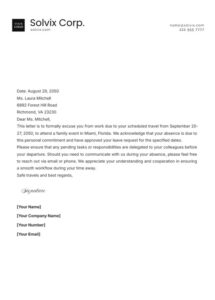
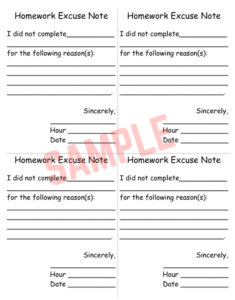
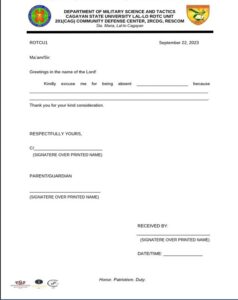
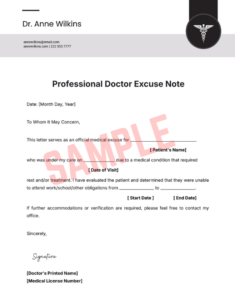
Using a formal, standardized religious holiday excused absence template offers numerous advantages for both the individual requesting the absence and the organization processing it. Templates streamline the communication process, reduce potential misunderstandings, and ensure consistency in requests. They transform a potentially awkward conversation into a structured, professional interaction.
Here are some key benefits:
- Clarity and Completeness: A template ensures that all necessary information, such as dates, reasons, and contact details, is included in the request, leaving no room for ambiguity. This helps prevent back-and-forth communication seeking missing details.
- Professionalism: Presenting your request through a formal template demonstrates respect for organizational procedures and conveys a professional attitude. This can positively influence how your request is perceived and handled.
- Consistency: For organizations, encouraging the use of a religious holiday excused absence template ensures that all requests are submitted in a uniform manner, simplifying the administrative process and record-keeping. It also helps uphold fairness in how such requests are evaluated.
- Legal Compliance: A well-designed template can subtly remind both parties of the need for reasonable accommodation, helping to ensure compliance with anti-discrimination laws related to religious observance. It can also serve as documented evidence of the request.
- Reduced Stress: For the individual, having a clear template reduces the stress of knowing what to say or how to phrase a sensitive request. It provides a ready-to-use framework, allowing you to focus on the religious observance itself.
- Efficiency: Templates save time for both the requester and the approver. The requester doesn’t have to draft a letter from scratch, and the approver can quickly find all pertinent information for a decision.
Navigating religious observances while managing professional or academic commitments requires clarity, respect, and proactive communication. Understanding your rights regarding religious accommodation is fundamental, empowering you to confidently request necessary time off without fear of discrimination. Utilizing tools like a well-structured religious holiday excused absence template significantly simplifies this process, ensuring all vital information is conveyed professionally and efficiently.
By preparing your requests early, including all essential details, and communicating respectfully, you foster a cooperative environment that benefits everyone. Empower yourself with the knowledge and resources to uphold your faith while excelling in your endeavors. A thoughtful approach to religious holiday leave ensures that your spiritual life and other commitments can coexist harmoniously.