Handling the logistics of daily life is already a full time job but when you add the complexity of managing childcare expenses it can feel overwhelming. Many employers offer benefits like a Flexible Spending Account or a Health Reimbursement Arrangement to help offset these costs with pre tax dollars. To actually see that money back in your bank account you generally need to provide proof of payment using a dependent care reimbursement receipt template that meets the specific requirements of your plan administrator.
The beauty of these tax advantaged accounts is that they allow you to set aside money before taxes are taken out which effectively lowers your taxable income. However the Internal Revenue Service is quite particular about how this money is spent and documented. It is not enough to simply say you paid someone for care because you have to prove it with detailed records that show exactly who provided the service and for whom the care was provided.
Starting your documentation process early can save you a massive headache during tax season or when you are trying to meet a reimbursement deadline. Having a consistent way to track your expenses ensures that you never leave money on the table. It acts as a bridge between your out of pocket spending and the funds waiting for you in your benefit account so you can maintain a healthier family budget.
Making Sense of Documentation Requirements
Navigating the world of employee benefits often feels like learning a second language. When you first sign up for a dependent care account you might not realize just how important the paperwork side of things is. Many people assume a simple bank statement or a canceled check will suffice for the reimbursement process. Unfortunately most plan administrators require much more granular data than what a standard bank transaction provides.
This is where a professional approach to record keeping comes into play. If you are paying an individual like a nanny or an in home caregiver they might not have a formal invoicing system in place. In these instances you are responsible for providing the structure. By using a standardized form you ensure that every necessary detail is captured at the time of payment rather than trying to track down a provider months after the service was rendered.
Critical Elements of a Valid Receipt
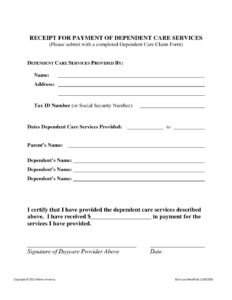
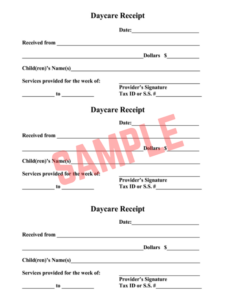
To ensure your claim is processed without delay the receipt must include the full name and address of the care provider. If the provider is a business you will need their employer identification number. If the provider is an individual you will likely need their social security number. This information is vital because the government uses it to cross reference the income reported by the provider against the claims you are making for tax benefits.
Another key component is the clear identification of the dependent. If you have multiple children or dependents receiving care the receipt should specify which person the service was for. This helps the administrator verify that the individual is an eligible dependent under the rules of your specific plan. Without this distinction the claim might be sent back for clarification which can delay your payment by several weeks.
You also need to clearly state the inclusive dates of service. This means listing the start date and the end date for the period being covered by that specific payment. It is a common mistake to only list the date the payment was made but the service dates are what truly matter for eligibility. The administrator needs to know that the care actually took place during the period you were covered by the benefit plan.
Finally the total amount paid should be written out clearly. It is often helpful to have both a numerical value and a written description of the service provided such as weekly after school care or summer day camp tuition. A signature from the provider acting as an acknowledgement of payment received adds a layer of authenticity that many administrators look for when reviewing claims for approval and final processing.
Streamlining Your Reimbursement Workflow
Once you have your documentation system in place the actual process of submitting claims becomes much less of a chore. Most modern benefit administrators offer an online portal or a mobile app where you can upload photos of your receipts. This digital approach is much faster than the old way of mailing in paper forms. However the quality of your digital copy matters just as much as the content of the receipt itself.
To avoid rejections you should make sure that your photos are clear and that all text is legible. If a corner of the receipt is cut off or if the ink is faded the automated systems used by many companies might flag it for manual review. Taking a few extra seconds to ensure a high quality scan or photo can be the difference between getting paid in three days or waiting for three weeks while an issue is resolved.
Consistency is your best friend when it comes to managing these accounts effectively. If you set a regular schedule for submitting your claims such as the first Monday of every month you will find that the task becomes part of your routine. This prevents a large backlog of receipts from piling up which can make the process feel much more daunting than it actually is. By staying organized you can ensure that your cash flow remains steady throughout the year.
Taking full advantage of your dependent care benefits is a smart financial move that can save you thousands of dollars over the course of a year. While the administrative side of things might seem tedious at first the rewards are well worth the effort. By implementing a clear system for tracking your expenses and using a reliable dependent care reimbursement receipt template you are setting yourself up for financial success and peace of mind.
As you become more comfortable with the requirements of your specific plan you will find that the process becomes second nature. Proper documentation protects you in the event of an audit and ensures that you receive every penny you are entitled to from your account. Keep your records tidy and your submissions timely and you will find that managing your childcare budget is much easier than you ever imagined it could be.